Axlevara · category range
Universal joints: cross-shaft driveline joints
Cross-shaft universal joints (U-joints) with internal and external retaining rings, supplied by cross-reference. 185 catalogue listings.
- Range
- Cross-shaft universal joints
- Catalogue
- 185 catalogue listings
- Reference
- Internal and external retaining ring types
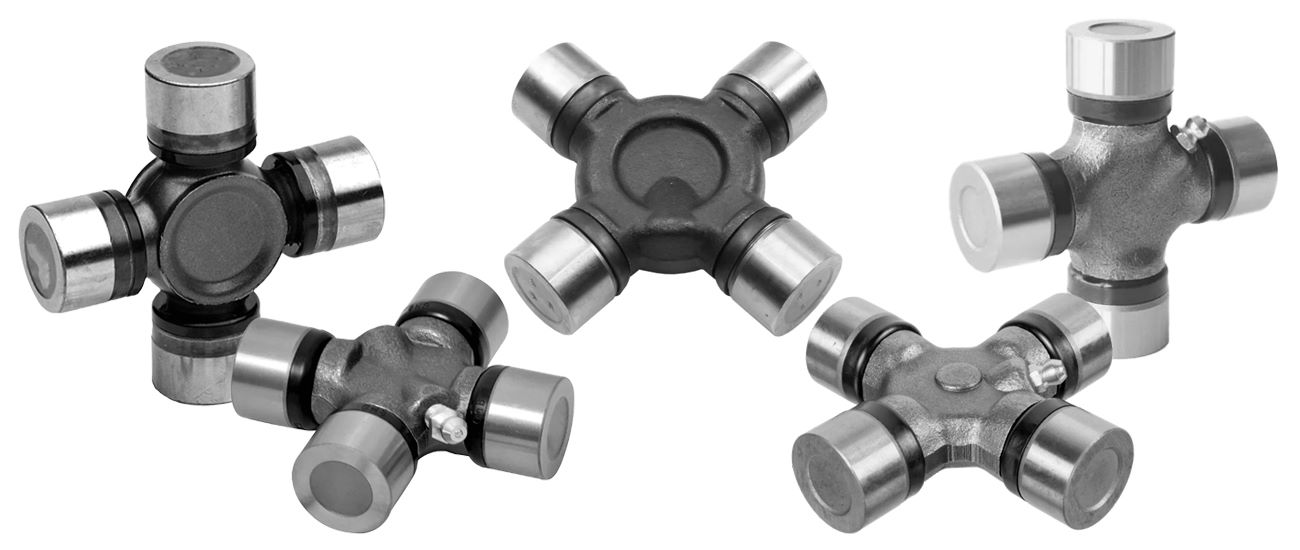
The cross-shaft joint
A universal joint lets a propshaft transmit rotation through an angle. The family is the cross-shaft type — a central cross with four bearing caps — supplied mainly with internal and external retaining rings. Ring position is the distinction that organises the range: it decides how the caps are held in the yoke, and it is the first thing an order must settle.
The family carries 185 listings. The trade shortens the part's name to U-joint, and 'universal joint cross' is the wording for the cross assembly itself; both are matched to this family.
Internal or external rings
External-ring joints carry their circlips on the outside of the yoke ears; internal-ring joints seat the rings inside the bore. The two are not interchangeable on the same yoke, and the ring position is visible on the old joint — it is the quickest identification check a buyer can run before ordering.
| Point | Note |
|---|---|
| Construction | Cross-shaft (spider) type |
| Retaining | Internal and external ring versions |
| Also called | U-joint; universal joint cross |
| Ordered by | Cross-reference, then ring position and size |
Ordering a U-joint correctly
Quote the cross-reference where one exists. Where it does not, the order needs the cap diameter, the joint's overall width and the ring position — the three measurements that settle exactly this situation. A joint described only by vehicle is a guess, because one shaft can carry different joints at its two ends.
The driveline pair
Universal joints and center support bearings wear on the same shaft and are diagnosed by the same vibration. The two families sit side by side, and a distributor can answer for the whole shaft from the shared symptom picture.
Grease, seals and the service interval
Universal joints live two kinds of life. Greasable joints carry a nipple and ask for grease at service intervals — a joint that is fed lasts, and a joint that is forgotten dries its needle rollers to dust. Sealed-for-life joints ask for nothing and give their whole life silently, then fail on the same symptoms. A buyer's fleet notes should record which kind each vehicle runs, because the maintenance conversation — and the failure timetable — differs completely between them.
Reassembly has its own discipline. The yokes a joint connects must go back in their original phase — marked before separation — or the shaft vibrates with new joints in it. Circlip seating is the other quiet failure: a clip not fully home lets a cap walk out under load. Neither error is in the part; both are prevented by the fitter's marks and checks, and both are worth a line in any workshop's ordering notes.
Driveline families ordered together
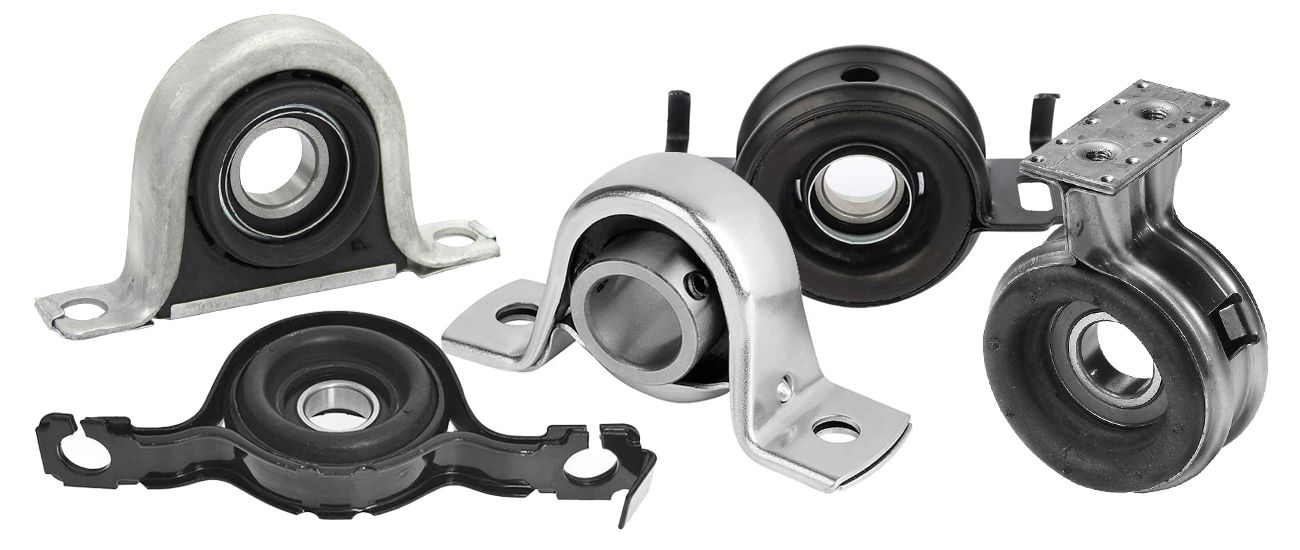
Center Support Bearings
The support bearing on the same shaft